


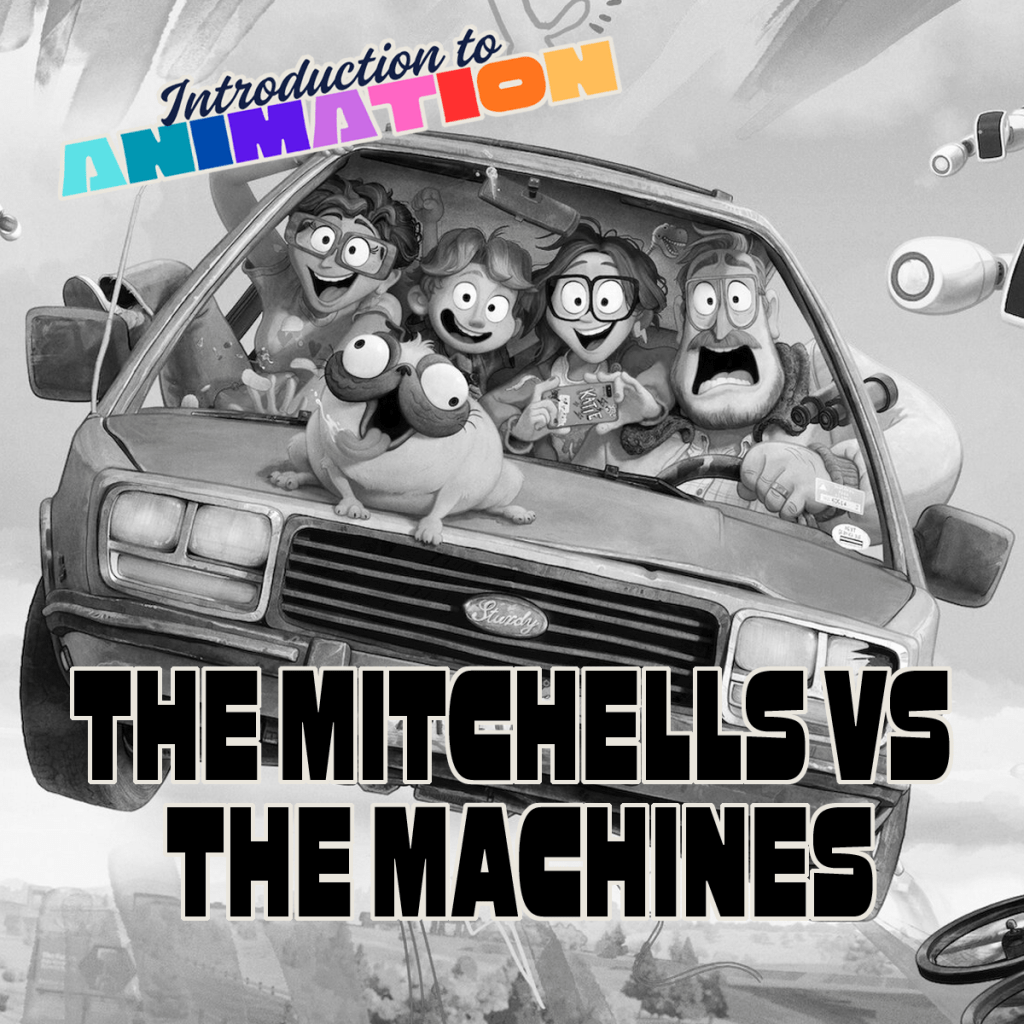
The Mitchells Vs. The Machines
Comedy / Animation
104 min.
2021
Described as a “quirky, dysfunctional family’s road trip”, ‘The Mitchells Vs. The Machines’ kicks off our ‘Intro to Animation’ film club. A 2021 release, this film marked the debut for director Michael Rianda on the big screen. An endearing journey, the film is definitely worth the watch and an amazing exploration of what animation is capable of.
Director Rianda grounds this fantastical animated adventure in characters that feel real with relatable relationships to each other. The quest to craft an authentic story went far. They used a real-life dog, Doug the Pug, to record the voice lines for the family dog Monchi.
The film feels stitched together from a history of cinematic tropes. It uses this to its advantage. It subverts expectations or reflects on the stories it is clearly inspired by. Some of its visual inspirations, like famous Studio Ghibli, are ever obvious to fans of animation. Breathtaking backdrops are common place in this movie. Even if many are scattered by American symbolism it invokes the wonder found in a Ghibli film. Other inspirations, like the Dogme 95 movement, are less clear to the viewer. Still, they are impactful in creating this grounded and relatable story.
As our preliminary film, ‘The Mitchells Vs. The Machines’ signifies a fresh take on mainstream western animation. Taking notes from films like ‘Into the Spider-verse’, animation goes beyond the world the film takes place within. Overlaid two-dimensional drawings provided by the film’s narrator compliments what is unfolding within the film’s world. The animation also features cel-shading — the technical term for the almost comic book-like way it’s been rendered.
The film develops its quirky style through our teenage narrator, Katie Mitchell. Many of the fourth-wall breaking moments feel believable because of how Katie is portrayed. Instead of distracting from the story, they help us feel closer to Katie and her thought-process. The film centers on the relationship between father and daughter. Secondary characters like Aaron and Linda still have opportunities to develop throughout the story.
I think this film signifies a larger shift in animation. There is a current want for animation that goes beyond what we’ve seen in the past. Why should an animated story be limited to constraints of the real world?
Let me know your thoughts below!


Leave a comment